
By John Tiong Jeh Lung | MPharm, PhD, RPh
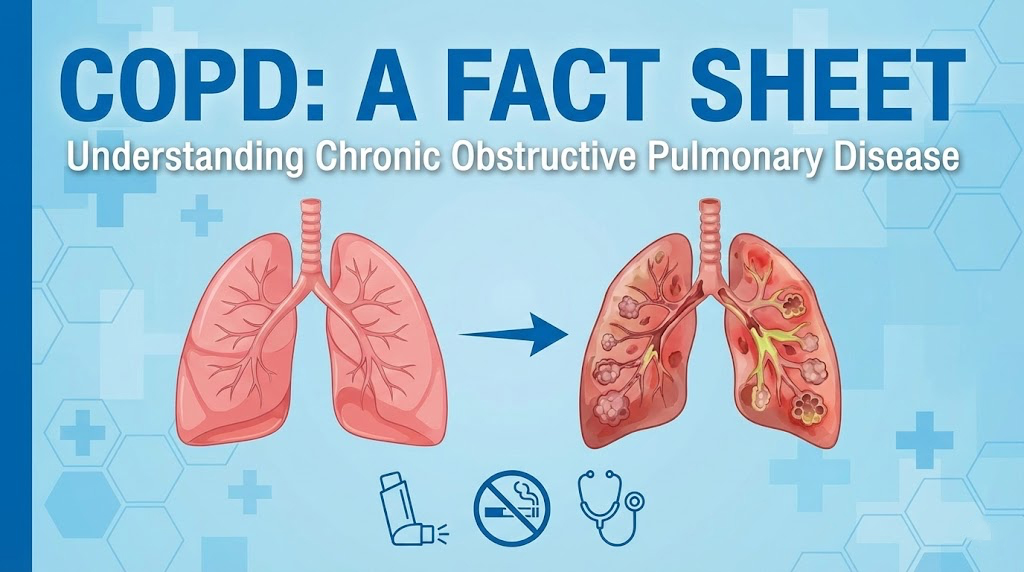
Did you know? Chronic Obstructive Pulmonary Disease (COPD), also known as Chronic Obstructive Airway Disease (COAD), is currently the fourth leading cause of death worldwide.
It accounts for 6% of all global deaths, with 90% of these occurring in developing countries. While often seen as an “elderly” disease, prevalence is rising among those aged 30 and above. It is also more common in cities than rural areas, where the progressive physical limitations can significantly impact career and daily life.
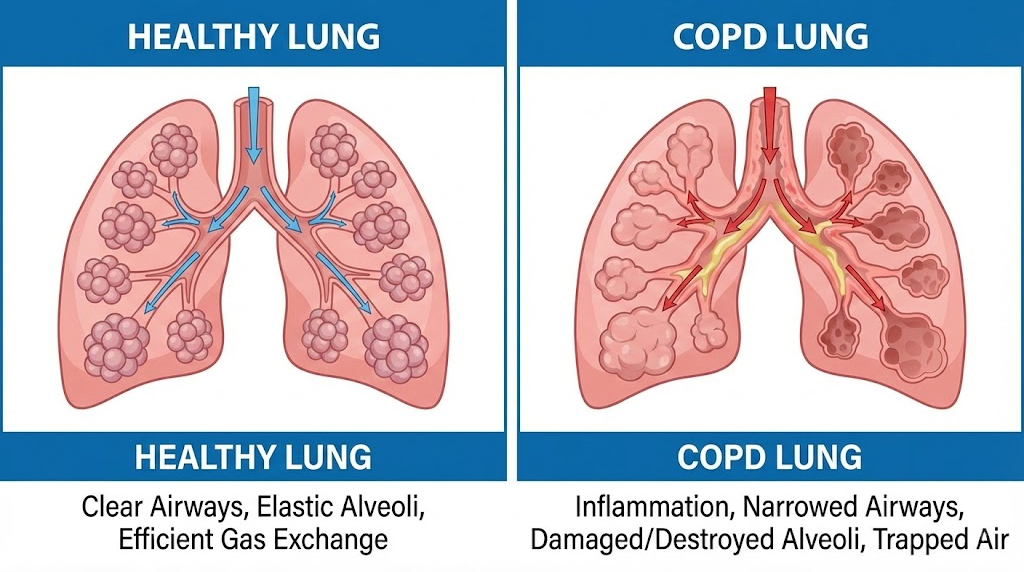
The hallmark of COPD is persistent inflammation in the lungs.
Think of it as a cycle of injury and repair: repeated damage causes the small airways to thicken and scar. Over time, this scarring narrows the airways (airway remodelling), trapping air inside the lungs and preventing effective breathing.
Common Symptoms Include:
Laboured breathing (Dyspnoea) – feeling “short of breath.”
Persistent cough that won’t go away.
Increased phlegm (sputum) production.
As lung function declines, patients may experience “flare-ups” (exacerbations). At the end-stage of the disease, symptoms become more severe and encompass the whole body:
Worsening breathlessness, even when resting.
Extreme lethargy (tiredness).
Unexplained weight loss.
Insomnia, Anxiety, and Depression.
While genetics (specifically Alpha-1 Antitrypsin Deficiency) play a role, most triggers are environmental.
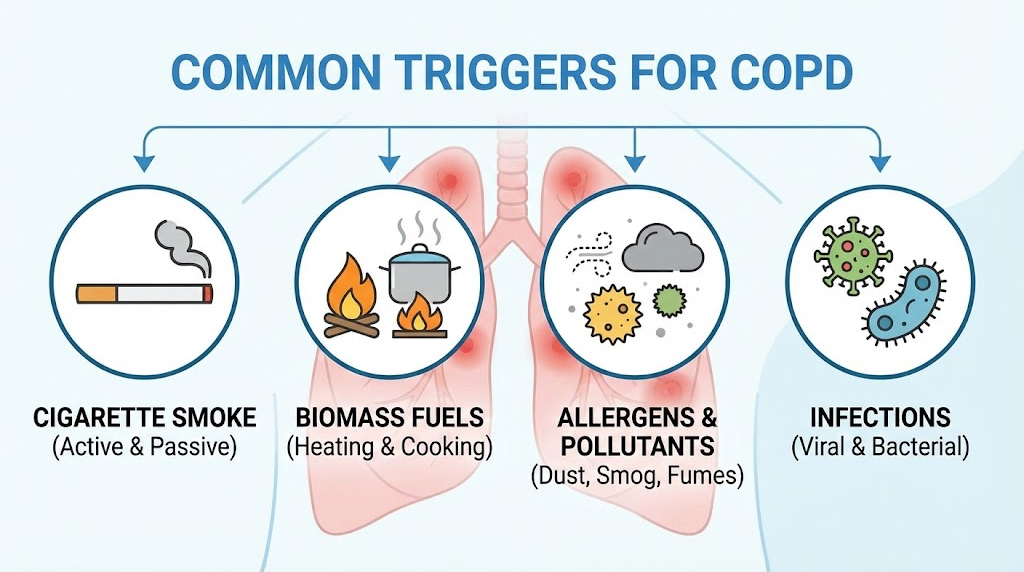
Cigarette Smoke: The #1 cause in high-income nations (includes secondhand smoke).
Biomass Fuels: Smoke from heating and cooking (leading cause in developing countries).
Pollutants: Dust, smog, outdoor smoke, and chemical fumes (paints, cleaning products).
Infections: Viral or bacterial lung infections can permanently damage airways.
While COPD is progressive, you can slow it down. The goal is to prevent “flare-ups” by managing your environment.
Lifestyle Action Plan:
Quit Smoking: Avoid active and passive smoke. Use nicotine replacement therapy if needed.
Ventilate: Turn on kitchen hoods or suction fans when cooking.
Air Quality: Stay indoors during high pollution days. Use an air purifier or air conditioner.
Chemical Safety: Minimize exposure to household cleaning products or strong fumes.
Prevent Infection: Get your Pneumococcal shot and annual Flu vaccination.
Stay Strong: Exercise regularly, get enough rest, and strictly adhere to your prescribed inhalers/medication.
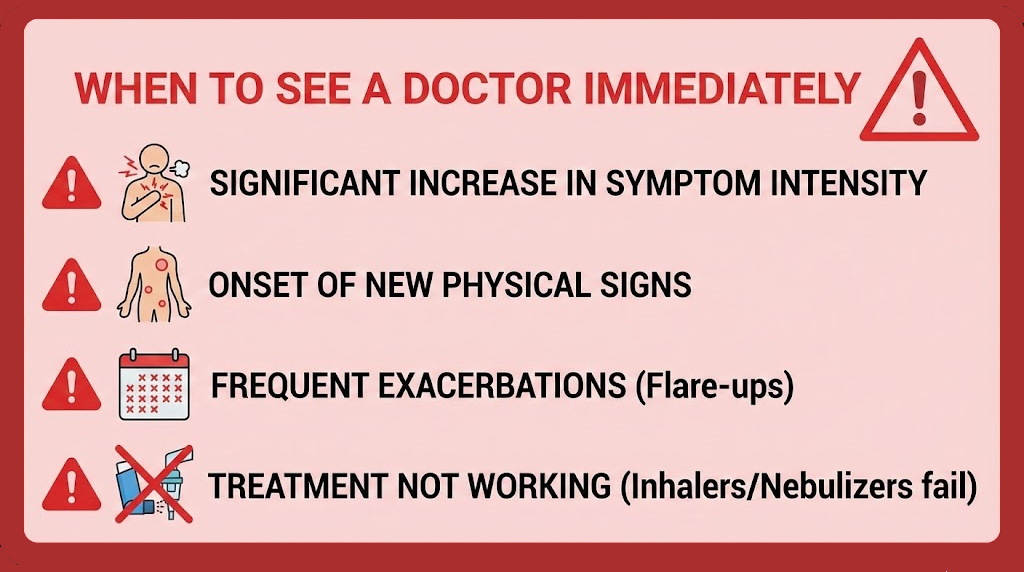
Do not ignore changes in your body. Seek immediate medical attention if you experience any of the following:
Aaron SD et al. (2012) Time course and pattern of COPD exacerbation onset. Thorax, 67: 238-243.
Adeolye A et al. (2015) Global and regional estimates of COPD prevalence. Journal of Global Health, 5(2): 020415.
Anthonisen NR et al. (2002) Smoking and lung function of Lung Health Study participants after 11 years. Am J Respir Crit Care Med, 166(5): 675-679.
GOLD (2016). Global strategy for the diagnosis, management, and prevention of chronic obstructive pulmonary disease.
Lim S et al. (2015) Impact of COPD in the Asia-Pacific region. Asia Pacific Family Medicine, 14(4).
WHO. Chronic Obstructive Pulmonary Disease (COPD): Fact Sheet.