
Mai Chun Wai,
BPharm, PhD, RPh
Haze is composed of small particles that can affect both your airways and vision. Haze particles are mainly formed from the incomplete combustion of fuel, open-air burning, by-products from motor vehicles or from manufacturing sites and plantations.
They can cause irritation to the eyes and respiratory tract on prolonged exposure. Individuals with existing respiratory diseases such as asthma and chronic obstructive pulmonary disease may experience worsened symptoms even on shorter exposure.
To assess the air quality, we can refer to the Air Quality Index (AQI), which is an index reported daily on air quality. It focuses on the health experience within a few hours or even days after breathing in unhealthy air. A higher AQI value indicates more pollution and a higher health hazard. Nevertheless, it is worth pointing out that poor visibility is not always caused by air pollutants while bad smells in the air does not always mean higher AQI reading.
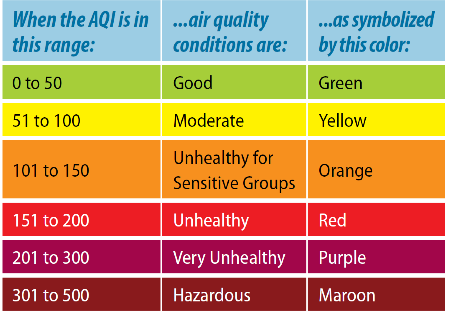
Air Quality Index. U.S. Environmental Protection Agency. Available at: https://www3.epa.gov/airnow/aqi_brochure_02_14.pdf
What can I do to remain healthy during haze?
- Drink at least 2 liters of water a day to keep your body hydrated.
- Avoid drinks that may cause frequent urination (and hence dehydration) such as coffee, tea or alcoholic drinks.
- Stay indoors whenever possible and close the windows.
- Reduce/avoid outdoor activities and wear a face mask if you need to go outdoors.
- Individual with existing respiratory conditions should have their medications on-standby in case of a sudden worsening of symptoms.
- Seek medical attention if you are feeling unwell.
- Monitor the change in air quality through mass media or governmental webpages.
Do I have to use an N95 mask or can I use a surgical mask?
It is common for most people to try and obtain masks whenever haze becomes severe. Unfortunately many people also wear surgical masks (shown below), which is designed to only prevent the spread of your own bodily fluids when you cough or sneeze. It is not designed to keep out fine particles such as those found in haze. To ensure proper protection against haze, one needs to wear a N95 mask which is at least 95% efficient against haze particles that are 0.1 – 0.3 microns in size.
Some common tips when using N95 masks:
- You only need N95 masks if you are going to outdoors and exposed to the haze for several hours. N95 masks are not needed for short exposures (such as walking from your car to your office) or when you are indoors.
- It is unadvisable to exercise intensely wearing a N95 mask, as it can limit the amount of air you inhale and increase breathing effort. Exercise indoors in a gym or wait until the haze clears.
- N95 masks only work if they fit tightly around your mouth and nose. Make sure you wear them properly.
- EN149 masks are similar to N95 masks. The EN149 classification comes from the European Standard while N95 certification comes from the US National Institute for Occupational Safety and Health.
You can get N95 masks from most pharmacies. Talk to the pharmacist to figure out which one is most suitable for you.
#haze #airqualityindex #pollution #healthhazard #N95mask