Depression: The Black Dog (An Overview of Major Depressive Disorder)

By Laura Kho Sui San | MPharm, RPh, BCPP (Board Certified Psychiatric Pharmacist)

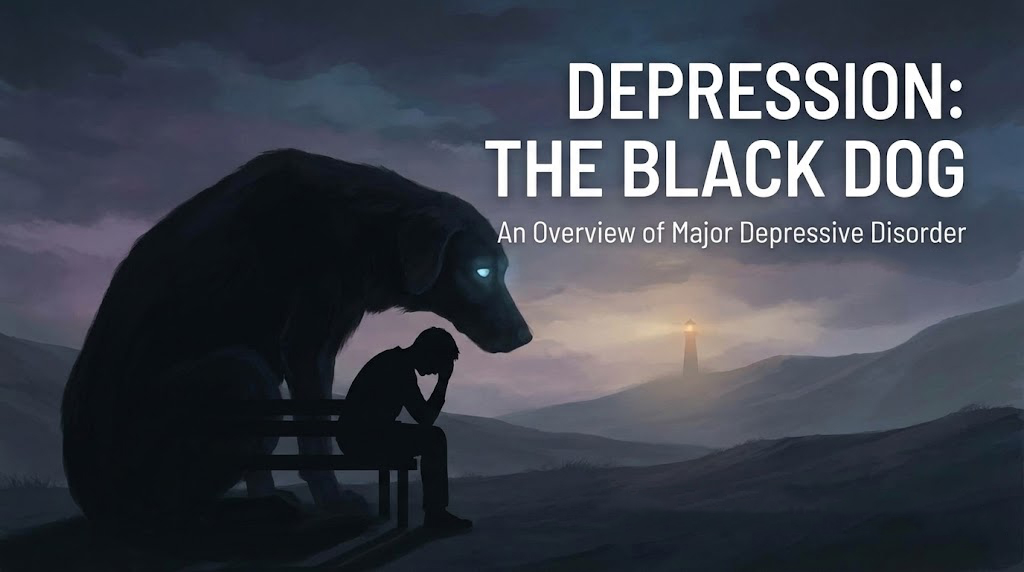
“The Black Dog.” Winston Churchill famously used this term to describe his own depression—a state of pervasive and persistent sadness. It is very real, and it cannot be written off by simply telling someone to “think happy thoughts.”

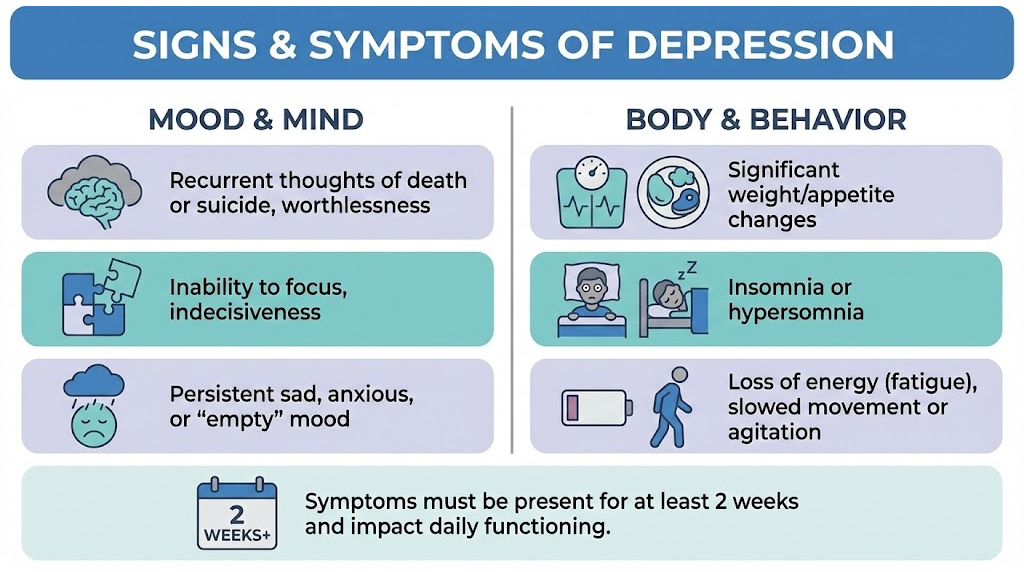
Everyone goes through periods of sadness, especially after life-defining events like a breakup or bereavement. But how do we distinguish normal sadness from pathological depression? The key lies in Duration, Severity, and Impact.

1. Spotting the Signs: Is it Depression?

Major depressive disorder is defined by a depressed mood or loss of interest in almost all activities, combined with three or more of the following symptoms:

2. Depression Looks Different in Everyone

Symptoms often manifest differently depending on who you are:

  • Teenagers: May show poor school performance, self-harm, or excessive drug/alcohol use.

  • Older Adults: Often complain of physical aches, memory issues, or personality changes rather than “sadness.”

  • Men: Frequently report fatigue, physical pain, and sleep problems rather than admitting to low mood.

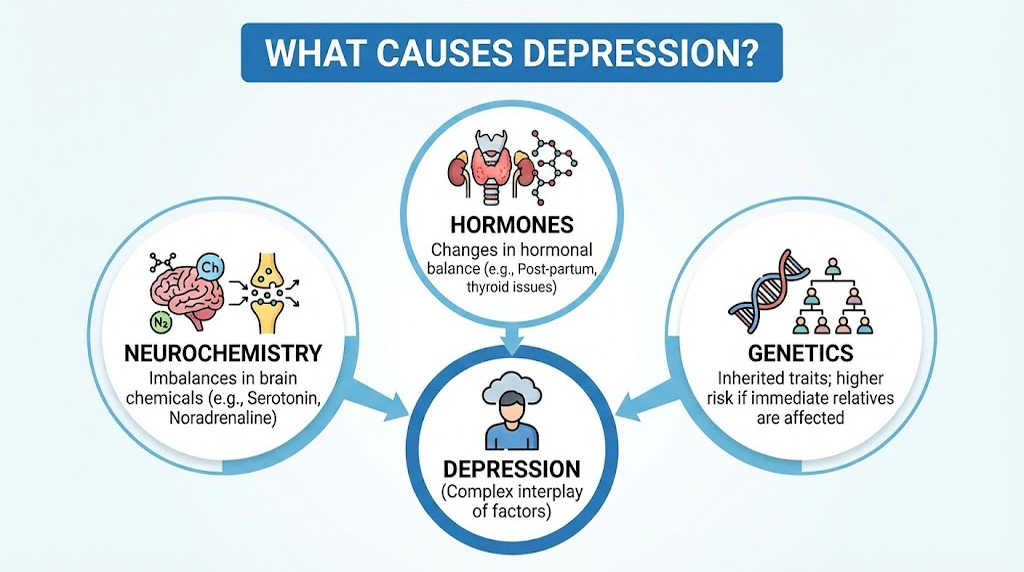
3. What Causes It?

It is rarely just one thing. Depression is usually a complex mix of factors:

4. Treatment Options: There is Hope

Treatment depends on severity and involves two main approaches: Pharmacological (Medication) and Non-Pharmacological (Therapy).

  • Mild Depression: Often treated with talking therapy (Counselling or CBT).

  • Moderate to Severe: Usually requires a combination of Medication + Therapy.

About Antidepressants: Common types include SSRIs, SNRIs, and NASSAs.

  • Patience is Key: These medications take 2-4 weeks to show benefits. Do not expect an immediate cure, and give the medication time to work.

5. Summary

Depression is treatable and manageable. Flippant comments like “stay positive” are dismissive of the genuine pain a depressed person feels. If you suspect you or a loved one is suffering, please seek professional help.

References

  1. American Psychiatric Association. (2013). Diagnostic and statistical manual of mental disorders: DSM-5.

  2. American Psychiatric Association. (2010). Practice Guideline for the Treatment of Patients with Major Depressive Disorder, 3rd edition.

  3. Clinical Practice Guidelines for the Management of Major Depressive Disorder (2007). Ministry of Health Malaysia.

  4. Lin, SY & Stevens, MB. (2014). The Symptom Cluster-Based Approach… J Am Board Fam Med, 27(1):151-159.

  5. NICE Guidelines (2016). Depression in adults: recognition and management.

Leave a Reply

Your email address will not be published. Required fields are marked *